- All
- Product Name
- Product Keyword
- Product Model
- Product Summary
- Product Description
- Multi Field Search

 English
Views: 0 Author: Site Editor Publish Time: 2026-10-15 Origin: Site


As urban development becomes denser, property owners and developers face growing pressure to provide more parking spaces without expanding land use. Mechanical parking technology offers an alternative to conventional parking garages, but choosing the right level of automation is essential.
Semi-automated and fully automated parking systems both increase vehicle storage capacity through mechanical movement. However, they differ in operating methods, installation requirements, user involvement, initial investment, and suitable applications.
Semi-automated systems generally provide a practical balance between cost and space efficiency, while fully automated systems offer more comprehensive vehicle handling and potentially higher parking density.
This guide compares both technologies to help developers, architects, and parking facility operators select the most appropriate solution for their projects.
Table of Contents
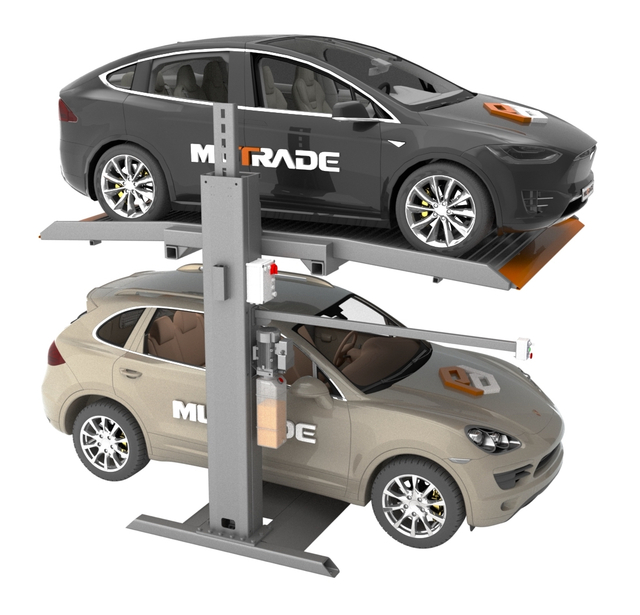
A semi-automated parking system uses mechanical platforms to move vehicles vertically or horizontally while requiring drivers to park or retrieve their cars at an accessible platform.
One common configuration is the puzzle parking system, also known as a lift-and-slide parking system. It arranges multiple parking platforms in a compact structure and automatically shifts selected platforms to the entrance level.
The operation typically follows five steps:
The driver selects the assigned parking space using a control panel or access card.
The control system identifies the required platform.
Adjacent platforms move horizontally or vertically to create an access path.
The selected platform reaches the entrance level.
The driver parks or retrieves the vehicle after movement stops and access is authorized.
Unlike simple dependent parking stackers, suitable puzzle parking configurations allow vehicles to be accessed without manually relocating another parked car.
Semi-automated parking systems offer several advantages for residential and commercial developments:
Space efficiency: Vertical stacking increases parking capacity within a limited footprint.
Lower initial investment: Generally less expensive than comparable fully automated installations.
Flexible layouts: Multi-level configurations can accommodate different building dimensions.
Simplified operation: PLC-controlled movements reduce manual vehicle repositioning.
Retrofit potential: Certain configurations can be installed in existing garages, subject to structural conditions.
Semi-automated parking is particularly suitable for apartment buildings, office properties, hotels, and commercial garages where space is limited but full vehicle automation is not essential.
For example, Mutrade's Puzzle Parking Systems use vertical lifting and horizontal sliding to increase parking density while maintaining convenient vehicle access.


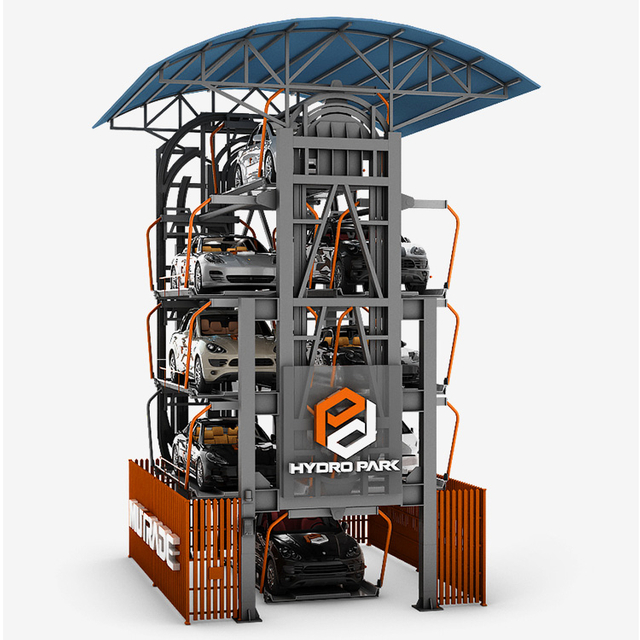
A fully automated parking system uses mechanical lifting, transferring, and storage mechanisms to park and retrieve vehicles with minimal driver involvement.
Drivers typically leave their vehicles inside a designated transfer area. After the system verifies the parking conditions, automated equipment moves the vehicle into an assigned storage space.
These systems are designed to maximize parking capacity while reducing the need for conventional driving aisles, ramps, and pedestrian access inside the storage area.
A typical operating process includes:
The driver enters the vehicle transfer area.
Sensors check vehicle positioning and safety conditions.
The driver exits the vehicle and confirms the parking request.
The automated system transports the vehicle to an available storage bay.
When retrieval is requested, the system returns the vehicle to the designated collection area.
The exact process varies depending on whether the equipment uses tower lifts, shuttles, rotating platforms, or other transfer mechanisms.
Fully automated parking systems offer several benefits:
High parking density: Reduce space requirements for internal driving and circulation.
Convenient vehicle handling: Drivers do not need to navigate the storage structure.
Flexible storage configurations: Tower and shuttle systems accommodate various building layouts.
Reduced manual handling: Automated machinery performs vehicle transfers.
Centralized control: Integrated controllers coordinate parking and retrieval operations.
However, these systems typically require more advanced engineering, larger initial investment, and specialized maintenance.
System Type | Operating Principle | Suitable Applications |
|---|---|---|
Tower Parking System | Vertical lift transfers vehicles between storage levels | Narrow urban sites, commercial buildings |
Shuttle Parking System | Lifts and horizontal shuttles transport vehicles | Large residential and public parking facilities |
Rotary Parking System | Platforms rotate vertically to access parking spaces | Small urban plots, roadside parking |
Circular Tower Parking | Central lift serves surrounding parking bays | High-density urban developments |
Explore Mutrade's Fully Automated Parking Systems for different configurations and project requirements.


6
Both technologies increase parking capacity, but their operational characteristics differ considerably.
Comparison Factor | Semi-Automated Parking | Fully Automated Parking |
|---|---|---|
Automation Level | Partial automation | Higher automation |
Driver Involvement | Driver accesses the selected platform | Driver leaves vehicle in transfer area |
Vehicle Movement | Lift-and-slide platform movement | Automatic lifting and vehicle transfer |
Parking Density | High | Potentially higher |
Initial Investment | Generally lower | Generally higher |
Installation Complexity | Moderate, depending on system | Typically more complex |
Vehicle Retrieval | Depends on platform movements | Depends on transfer and retrieval mechanisms |
Maintenance | Mechanical and control components | More complex mechanical and control systems |
Best Applications | Apartments, offices, hotels | Urban towers, commercial complexes, large facilities |
The main difference is the degree of driver involvement and mechanical automation. Semi-automated systems move parking platforms into accessible positions, while fully automated systems handle most vehicle movement inside the storage structure.
Parking density is one of the most important selection factors.
Semi-automated puzzle parking systems increase capacity by stacking vehicles across multiple levels. Depending on their configuration, they can utilize existing parking areas without requiring conventional multi-story ramps.
Fully automated parking systems can achieve greater storage density in suitable designs by eliminating much of the internal circulation space required for drivers.
However, higher automation does not automatically guarantee greater capacity on every site.
Developers should compare the number of usable parking spaces against the complete equipment footprint, entrance areas, maintenance clearances, and structural requirements.
Vehicle retrieval efficiency depends on system configuration, simultaneous requests, and peak-hour traffic.
In semi-automated puzzle systems, platforms may need to move in sequence before the requested vehicle becomes accessible. Waiting times therefore depend on the parking arrangement and current platform positions.
Fully automated systems retrieve vehicles using controlled transfer mechanisms. High-capacity configurations may support multiple entrances, lifts, or storage movements, depending on their design.
For residential buildings and commercial facilities, project planners should evaluate:
Average vehicle retrieval time.
Peak-hour vehicle requests.
Available entry and exit positions.
System capacity under simultaneous demand.
The best system is not necessarily the one with the fastest individual movement. It is the configuration that handles the facility's expected traffic without excessive queues.
Parking system installation must account for building dimensions, equipment loads, electrical capacity, and applicable regulations.
Semi-automated systems generally use steel frames, lifting platforms, drive units, and PLC controls. Depending on the model, installations may be above ground or incorporate underground pits.
Fully automated systems often require additional transfer mechanisms, structural coordination, entrance cabins, and more complex control infrastructure.
Both systems should be evaluated through a site-specific feasibility study covering foundation capacity, vehicle clearance, emergency access, and maintenance requirements.
Parking system cost depends on the equipment type, vehicle capacity, automation level, and construction requirements.
Semi-automated systems typically offer a lower entry cost because they use comparatively simpler lifting and sliding mechanisms.
Fully automated systems require more sophisticated equipment and control integration. Their higher initial cost may be justified where land is expensive or conventional parking structures would require extensive construction.
A meaningful cost comparison should include total ownership costs rather than only equipment pricing.
Both parking system types require preventive maintenance.
Semi-automated systems generally involve servicing lifting mechanisms, hydraulic or electric drives, safety sensors, and platforms.
Fully automated systems may additionally require maintenance of transfer equipment, specialized controls, multiple lifting units, and coordinated movement mechanisms.
Developers should compare component accessibility, spare parts availability, maintenance intervals, and technical support before making a purchasing decision.
The best choice depends on the building type, available land, parking turnover, and project budget. Different property types require different balances between storage density and retrieval efficiency.
Semi-automated puzzle parking systems are often suitable for residential buildings with predictable parking demand and moderate budgets. They provide additional spaces without requiring the complexity of full automation.
Fully automated systems may be more appropriate for high-rise residential developments where land is extremely limited and convenient vehicle handling is a priority.
Office buildings experience concentrated arrival and departure periods. System selection should therefore consider peak-hour throughput, not just total parking capacity.
Semi-automated solutions are useful where users can access parking platforms conveniently. Fully automated systems may offer advantages where conventional driving areas would consume valuable building space.
High-turnover parking facilities require efficient vehicle entry, storage, and retrieval.
Fully automated systems with suitable transfer capacity can serve larger public parking projects. However, facilities with extremely high turnover must carefully evaluate queueing performance and the number of entrance and retrieval positions.
Semi-automated systems remain suitable for smaller commercial sites with moderate traffic volumes.
Hotels and mixed-use buildings often have limited ground space and varied parking demand.
Semi-automated systems offer a practical choice for projects with predictable parking activity. Fully automated tower or shuttle configurations may be preferred where land costs are high and maximizing usable building space is a major development objective.
Project Type | Recommended Starting Option | Main Reason |
|---|---|---|
Small Residential Building | Semi-Automated Puzzle | Cost-effective capacity expansion |
Mid-Rise Apartment Complex | Semi-Automated or Fully Automated | Depends on space and retrieval demand |
Narrow Urban Development | Fully Automated Tower | Vertical storage on restricted land |
Large Commercial Facility | Automated Shuttle | Flexible high-capacity storage |
Hotel Parking | Either, based on layout | Balance user convenience and investment |
Existing Garage Retrofit | Semi-Automated Puzzle | Potentially less extensive modification |
These recommendations are preliminary. Final selection requires project-specific layout and throughput analysis.
Mutrade offers both semi-automated and fully automated parking equipment for different project requirements.
The BDP Series Puzzle Parking Systems combine lifting and horizontal sliding to make selected parking platforms accessible.
The series includes two-level and multi-level configurations, such as the BDP-2, BDP-3, BDP-4, BDP-5, and BDP-6.
These systems are suitable for developers seeking higher parking density with moderate automation and flexible equipment arrangements.
The ATP Automated Tower Parking System uses vertical lifting and vehicle transfer mechanisms to store cars across multiple levels.
This configuration is particularly useful for narrow urban sites where horizontal expansion is difficult. Mutrade describes ATP tower configurations capable of reaching up to 35 levels, depending on system specifications.
The MLP Shuttle Parking System combines vertical lifts with horizontal vehicle transfer mechanisms.
It is designed for larger parking projects requiring multiple storage positions and coordinated automatic vehicle movement. Mutrade lists MLP configurations supporting up to 100 parking spaces across a maximum of six levels in its published product overview.
Before selecting a system, developers should complete a structured project assessment.
Project Selection Checklist
1、Define the required number of parking spaces
2、Measure usable footprint, height, and structural capacity
3、Estimate peak-hour vehicle arrival and retrieval demand
4、Determine the acceptable installation and operating budget
5、Review safety regulations and building access requirements
6、Confirm maintenance resources and future EV requirements
A semi-automated system is generally worth considering when:
The project needs additional spaces within an existing or planned parking area.
The budget favors simpler mechanical equipment.
Users can safely drive onto accessible parking platforms.
Parking demand is moderate and relatively predictable.
The building supports a suitable lift-and-slide layout.
A fully automated system may be more suitable when:
Maximum parking density is a major project requirement.
Drivers should not enter the storage structure.
The development has a narrow or irregular site.
Conventional ramps and circulation areas significantly reduce usable space.
The project can support more complex engineering and maintenance.
The final decision should consider the overall development cost, not simply the price of the parking equipment.
A system may provide enough parking spaces but still create queues during busy periods. Developers should evaluate peak-hour traffic, simultaneous retrieval requests, and the number of available transfer positions.
Ceiling height, foundation capacity, vehicle weight, and turning space affect equipment compatibility. Overlooking these requirements may lead to redesigns or unexpected construction costs.
A lower purchase price does not always mean better value. Installation, maintenance, electricity consumption, downtime, and usable building area should all be included in the financial assessment.
Both semi-automated and fully automated systems rely on mechanical components and safety controls. Reliable supplier support, replacement parts, and preventive maintenance are essential for long-term operation.
Semi-automated and fully automated parking systems serve different project requirements.
Semi-automated puzzle parking systems offer a balance of affordability, space efficiency, and convenient mechanical operation. They are often suitable for apartment buildings, offices, hotels, and existing parking facilities.
Fully automated parking systems provide more comprehensive vehicle handling and can achieve higher parking density in suitable configurations. They are particularly valuable for narrow urban plots, high-rise developments, and projects where conventional driving aisles consume too much space.
The right choice ultimately depends on parking capacity, retrieval efficiency, available space, project budget, and long-term operating requirements.
As a manufacturer of mechanical and automated parking equipment, Mutrade offers different system configurations to meet residential, commercial, and high-density parking needs. Contact our team to discuss site dimensions, required capacity, and suitable equipment options.
Semi-automated parking systems require drivers to park or retrieve vehicles from accessible platforms while machinery adjusts platform positions. Fully automated systems handle most vehicle transfer and storage operations after drivers leave the cars in designated transfer areas.
Semi-automated parking systems generally require a lower initial equipment investment. Fully automated systems may offer better overall development value when land prices are high or significant space savings are achievable.
Most lift-and-slide puzzle parking systems are classified as semi-automated. Their platforms move automatically, but drivers still park and retrieve vehicles at an accessible level.
Fully automated parking systems can offer higher density in suitable layouts because they reduce conventional vehicle circulation space. However, actual capacity depends on the building dimensions, equipment configuration, and entrance requirements.
Vehicle retrieval time varies according to the system type, equipment layout, storage location, and simultaneous requests. Buyers should request model-specific cycle-time data and peak-hour throughput estimates.
Yes, certain semi-automated systems can be installed in existing parking facilities. Structural capacity, ceiling height, vehicle dimensions, and foundation requirements must be evaluated before installation.
Fully automated parking systems often have more complex transfer mechanisms and control systems. Their maintenance requirements depend on the selected design, number of moving components, operating frequency, and manufacturer's recommendations.
Some mechanical and fully automated parking systems can accommodate EVs when vehicle weight limits and dimensions are suitable. Integrated EV charging requires compatible equipment, electrical infrastructure, and project-specific engineering.