- All
- Product Name
- Product Keyword
- Product Model
- Product Summary
- Product Description
- Multi Field Search

 English
Views: 0 Author: Site Editor Publish Time: 2026-08-19 Origin: Site


Commercial real estate costs restrict dealership expansion across the country. You need to house more high-value vehicles and electric vehicles indoors for weather protection and security. However, existing showroom and warehouse square footage limits your capacity. Building new facilities requires massive capital and years of zoning approvals. Instead of acquiring adjacent land, smart operators look upward. A commercial-grade Car Storage Lift serves as a strategic infrastructure investment. Vertical stacking resolves capacity constraints instantly without new construction. This guide details how to maximize your indoor inventory capacity efficiently. We cover how to evaluate, select, and implement vertical storage solutions tailored specifically for modern dealership environments. You will learn the exact concrete specifications, ceiling height formulas, and operational workflows required to double your indoor footprint.
Capacity Multiplier: Implementing a multi-unit car storage lift system can increase indoor vehicle capacity by up to 100% within the same floor plan.
EV Weight Considerations: Modern dealership inventory requires lifts with a minimum 6,000 to 9,000 lb. load capacity to safely accommodate heavier Electric Vehicles (EVs) and luxury SUVs.
Infrastructure Prerequisites: Successful installation hinges on verifiable facility metrics, specifically concrete slab depth (typically 4-inch minimum at 3000 PSI) and adequate ceiling clearance.
Operational Scalability: Linked lift systems utilizing a single power unit for multiple stackers offer the highest density and ROI for commercial inventory management.
Table of Contents
Acquiring new commercial land involves massive upfront capital and endless red tape. You have to fund soil testing, environmental impact studies, and civil engineering before pouring a single yard of concrete. Zoning approvals take months or even years to secure. Paving new lots adds environmental compliance hurdles regarding water runoff and drainage engineering. Vertical storage bypasses these obstacles entirely. You install equipment inside your existing footprint. You bolt steel columns directly to your current warehouse floor. This strategy transforms empty vertical air into highly profitable inventory space. Direct profitability increases when you hold more on-hand inventory. Customers buy what they can physically see and test drive today. Having vehicles ready for immediate sale drives top-line revenue. You also gain significant tax advantages. Equipment purchases often qualify for accelerated depreciation under Section 179 deductions. You can write off this equipment investment much faster than traditional real estate improvements. You avoid property tax reassessments that trigger when you expand a building footprint.
High-value inventory demands rigorous protection. Leaving luxury vehicles outside exposes them to unpredictable elements. Hail storms cause catastrophic lot damage in minutes, wiping out entire rows of inventory. Prolonged UV exposure degrades clear coats, fades interiors, and damages rubber weather seals. Theft and catalytic converter vandalism remain constant threats on open lots, even with perimeter fencing and security cameras. Moving inventory indoors eliminates these environmental and criminal risks. Secure indoor storage protects your most valuable assets behind locked steel doors. This risk reduction directly impacts your bottom line. Insurance carriers recognize the decreased risk profile of indoor storage. You can often negotiate lower lot insurance premiums when you move high-theft targets inside. The savings on insurance premiums and eliminated damage repairs offset the equipment investment rapidly. You stop filing claims for stolen wheels and shattered windows.
Crowded exterior lots create daily operational nightmares. Staff waste countless hours moving cars just to access one specific vehicle. This constant lot shuffle inevitably leads to minor collisions. Scratches, dents, and scraped bumpers eat directly into your profit margins. Moving cars constantly also drains batteries, leading to jump-starts and premature battery replacements. Clearing floor space improves your entire operation. Service bay throughput increases dramatically when technicians have room to maneuver. Technicians navigate the shop without obstruction, pulling cars in and out of bays efficiently. Vertical storage simplifies vehicle retrieval entirely. You select the exact car you need. You lower it directly to the ground. You eliminate the need to move five blocking cars just to reach the one you want. Lot attendants spend their time prepping cars for delivery instead of playing musical chairs with your inventory.
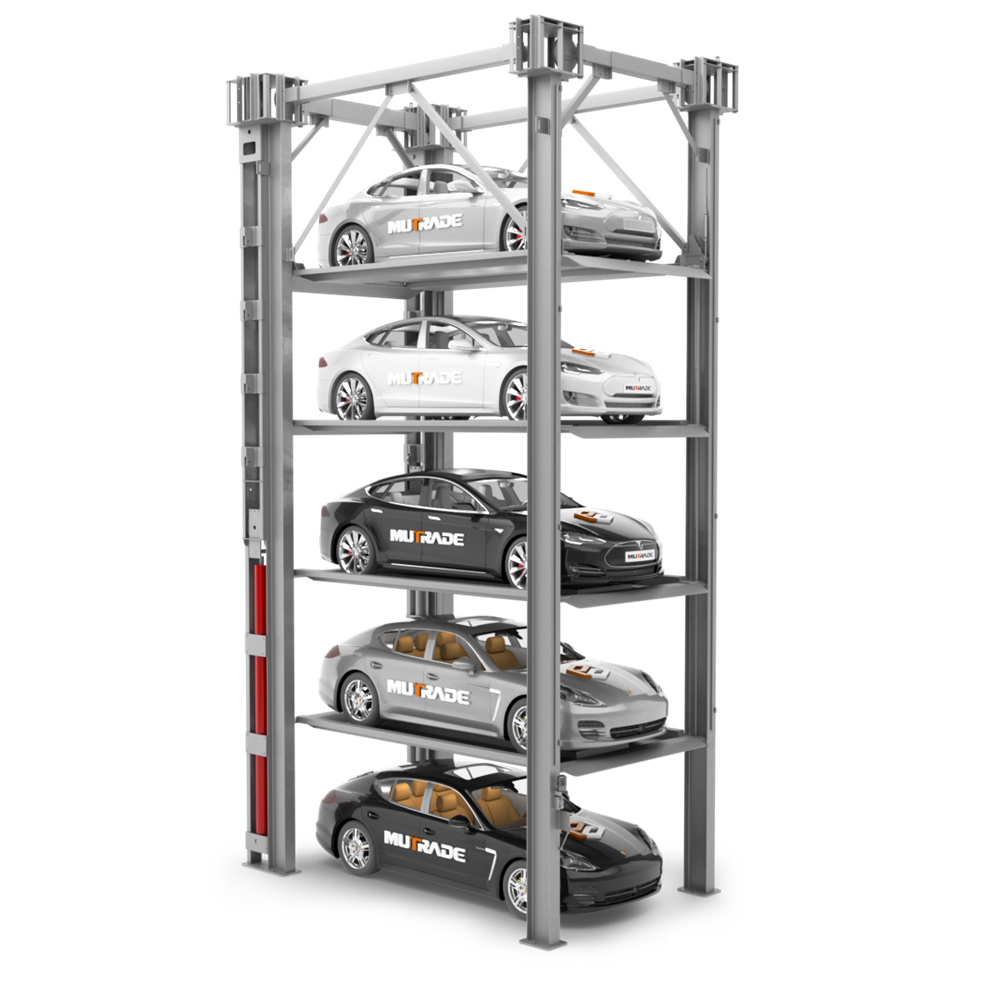
Four sturdy columns support the vehicle platform in this design. Solid steel runways allow for easy drive-on and drive-off access. The mechanics rely on heavy-duty wire rope cables and hydraulic cylinders mounted underneath the runways. They handle massive weight loads with ease. This makes them perfect for long-term storage of heavy inventory. Dealerships use them extensively for lifted trucks, commercial vans, and large luxury SUVs. The primary trade-off is the physical footprint. The four outer columns consume more floor space per vehicle compared to other designs. They require wider bays for comfortable operation. You must account for the baseplates and the power unit mounted on the side of one column. Operators appreciate the simplicity of the design. You drive straight on, set the parking brake, and press the up button. Mechanical safety locks engage automatically as the carriage rises, providing redundant protection against hydraulic failure.
These units utilize scissor mechanisms or specialized cantilever designs. They eliminate bulky corner columns entirely. This creates a clean, unobstructed visual profile. They fit perfectly in high-end showroom environments. Visual merchandising remains completely uninterrupted. Customers can view the vehicles clearly from all angles without steel posts blocking the sightlines. They work exceptionally well in low-clearance areas where traditional posts would hit the ceiling. Dealerships prioritize these when aesthetic presentation and minimal structural obstruction are paramount. Installation often requires recessing the base into the concrete for a flush finish. This allows sports cars with low ground clearance to drive over the mechanism without scraping the undercarriage. The hydraulic cylinders push directly upward, requiring less mechanical linkage than cable-driven systems.
High-density storage requires maximum efficiency. Linked systems connect multiple lift units together in a continuous row. You can string ten to fourteen stackers together easily. They share common center columns, which saves significant floor space. Instead of two lifts requiring eight posts, linked systems use six posts. They all operate from a single centralized power unit. This architecture reduces electrical infrastructure requirements drastically. You only wire one main power station instead of fourteen individual motors. Maintenance becomes synchronized and highly streamlined. You check fluid levels in one large reservoir instead of fourteen small ones. This setup maximizes profitability per square foot in large warehouse applications. Hydraulic lines route neatly along the top crossbeams, keeping the floor clear of tripping hazards.
Electric vehicles carry massive, dense battery packs. They weigh significantly more than traditional internal combustion vehicles. A standard gas sedan might weigh 3,500 pounds. Its EV equivalent easily exceeds 5,000 pounds. Electric trucks push past 7,000 pounds. You must audit your current and future inventory weights carefully. Never underestimate this critical factor. Over-speccing load capacity is absolutely mandatory today. Opt for 9,000 lb. lifts instead of standard 6,000 lb. models. This ensures absolute safety for heavy EVs and oversized luxury SUVs. Future-proofing your facility prevents costly equipment replacements later. You must also consider weight distribution. EVs often have a near 50/50 weight distribution, whereas gas trucks are front-heavy. The lift runways must support these varying load dynamics without bowing or deflecting.
Vehicle Weight Comparison Guide
Vehicle Category | Internal Combustion Engine (ICE) Average Weight | Electric Vehicle (EV) Average Weight | Recommended Lift Capacity |
|---|---|---|---|
Compact Sedan | 2,800 - 3,200 lbs | 3,800 - 4,200 lbs | 6,000 lbs |
Mid-Size SUV | 4,000 - 4,500 lbs | 5,200 - 5,800 lbs | 7,500 lbs |
Full-Size Truck | 5,000 - 5,800 lbs | 7,000 - 8,500 lbs | 9,000+ lbs |
Basic math dictates your vertical storage limits. You must calculate the exact required ceiling height before purchasing. Use this exact formula: Height of Bottom Vehicle + Height of Top Vehicle + Lift Runway Thickness + Clearance Buffer. Always include a minimum six-inch safety buffer. Watch out for garage door tracks and openers. Standard tracks often interfere with lifted vehicles. You may need high-lift door conversions. Relocating tracks closer to the ceiling reclaims valuable vertical space. Swap traditional overhead drawbar openers for wall-mounted jackshaft openers. Measure to the lowest hanging obstruction, including lights, fire sprinklers, and HVAC ducts. Do not measure to the roof deck; measure to the bottom of the lowest roof truss. If you have a pitched roof, calculate clearance based on the lowest point where a vehicle roof will sit.
Evaluate the true physical footprint of the equipment. Baseplates extend several inches beyond the vertical columns. Power units require dedicated mounting space on the side or front of the column. Small commercial garages demand strict layout optimization. Staggered column placement can save precious inches between bays. Analyze how column placement affects vehicle retrieval times. Dealership aisles require adequate turning radius. Drivers must navigate onto the lift runways safely. Tight aisles increase the risk of expensive rim damage against the steel approach ramps. Map the layout with tape on your floor before ordering. Follow these specific steps to verify your layout:
Measure the exact width of your dealership aisles from wall to wall.
Mark the proposed lift baseplate locations on the floor using high-visibility tape.
Drive your longest and widest vehicle through the taped layout to test the turning radius.
Verify that vehicle doors can open fully without striking adjacent lift columns.
Confirm that the power unit placement does not obstruct pedestrian walkways.
High-volume dealerships move fast. Lift speed becomes a critical purchasing criterion. Evaluate ascent and descent speeds carefully. Slow lifts create frustrating workflow bottlenecks. Retrieving a vehicle for an eager customer test drive must be seamless. Customers will not wait ten minutes for a car to descend. Fast cycle times keep service appointments on schedule. Look for commercial units designed for rapid, continuous cycling. Check the gallons per minute (GPM) rating on the hydraulic pump. Higher GPM means faster lifting. Descent speed relies on the release valve and the weight of the vehicle. Ensure the descent valve offers smooth, controlled lowering without jerking.
Engineering requirements for concrete are non-negotiable. Lifts exert tremendous point loads on the floor through small baseplates. You need a minimum concrete depth of four to six inches. The concrete must meet a strict 3000 PSI rating. Installing on cracked slabs invites disaster and structural failure. Post-tension slabs present unique drilling hazards. Striking a post-tension cable during anchor installation can compromise the entire building structure and cause fatal injuries. Mitigate these risks immediately. Mandate a professional core test before procurement. An independent engineer must verify your slab integrity. Reinforce the concrete if it fails the initial depth test. You may need to cut out sections of the floor and pour isolated footings with 4000 PSI concrete and heavy rebar grids to support commercial lifts.
Vertical storage requires robust, reliable power. Outline your power requirements early in the planning phase. Determine if you need 110V or 220V power. Check for single-phase or three-phase availability in your building. Three-phase power operates more efficiently for large commercial motors. Older commercial buildings often lack sufficient electrical panel capacity. Running new dedicated circuits involves hidden costs. Centralized power units require heavy-duty wiring, often 10 AWG or thicker, and dedicated 30-amp breakers. Consult a licensed commercial electrician before finalizing your equipment order. You must install proper disconnect switches near the power units to comply with electrical codes. Surface-mounted conduit must be routed safely away from moving lift components and vehicle travel paths.
Vertical storage changes your building's fire dynamics entirely. Stacked vehicles can easily obstruct existing commercial fire sprinkler patterns. Local zoning codes strictly regulate fire safety and suppression coverage based on National Fire Protection Association (NFPA) standards. You must address this risk proactively. Consult with your local fire marshal before installation begins. You might need to lower existing sprinkler heads or install deflector shields. High-density warehouse setups often require specialized in-rack fire suppression systems. Budget for these potential plumbing modifications early. Upgrading your main water line to support higher sprinkler flow rates adds significant time and expense to the project. Never install lifts without written approval from the fire marshal.
Automotive Lift Institute (ALI) certification is the industry gold standard. It serves as a mandatory baseline for commercial liability. Uncertified equipment exposes your dealership to massive legal risk. Worker safety depends on rigorous, independent testing standards that verify the yield strength of the steel and the reliability of the safety locks. OSHA closely monitors vehicle lifts in workplace environments. Inspectors actively look for valid ALI certification tags on the columns. Compliance protects your employees and shields your business from heavy fines. If an accident occurs on an uncertified lift, your commercial insurance provider will likely deny the claim. Demand proof of ALI certification from the manufacturer before signing any purchase orders.
Equipment longevity requires strict, documented upkeep. Outline required daily, weekly, and annual inspection routines. Check wire rope cable tension regularly to prevent uneven lifting. Monitor hydraulic fluid levels and check cylinders for weeping seals. Verify that mechanical safety locks engage perfectly every single time with an audible click. Establish ongoing maintenance contracts with certified technicians. Regular professional servicing prevents catastrophic failures and extends equipment life. Keep a maintenance log attached to every lift. Lubricate sheaves, pulleys, and carriage sliders with the manufacturer-recommended grease. Replace hydraulic fluid according to the service manual intervals to prevent pump wear.
Recommended Dealership Lift Maintenance Schedule
Frequency | Maintenance Task | Responsible Party |
|---|---|---|
Daily | Visual inspection of cables, locks, and fluid leaks. Verify runway clear of debris. | Lot Attendant / Operator |
Weekly | Check cable tension, runway levelness, and anchor bolt torque. | Service Manager |
Monthly | Lubricate pulleys, columns, and moving mechanical parts. Inspect hydraulic hoses. | In-house Technician |
Annually | Full structural audit, wire rope replacement evaluation, and hydraulic pressure test. | Certified Lift Inspector |
Equipment is only as safe as the operator using it. Strict, documented operational training is an absolute necessity. Dealership staff must understand load limits and proper weight distribution. Prevent user-error accidents during vehicle retrieval through repetitive training. Operators must know how to spot vehicles properly, chock wheels, and check overhead clearance before pressing the lift button. Maintain signed training logs for every employee. Revoke operational access for untrained personnel immediately. Post clear safety guidelines directly on the lift columns. Teach staff how to manually lower the lift in the event of a power outage using the hydraulic release valve.
Schedule a professional site survey with a commercial lift distributor to measure ceiling clearances and aisle widths.
Hire an independent structural engineer to perform a concrete core test and verify slab integrity.
Audit your current electrical panel capacity with a licensed commercial electrician to ensure adequate power for hydraulic units.
Consult your local fire marshal regarding sprinkler coverage modifications required for vertical vehicle storage.
A: You must calculate the combined height of both vehicles. Add the thickness of the lift runway deck. Finally, add a mandatory six-inch safety buffer. For two standard sedans, you typically need at least 114 to 120 inches of clear ceiling height. Always measure to the lowest hanging obstruction, such as lights or HVAC ducts.
A: Yes. Multi-unit linked systems are designed specifically for commercial settings. You can string multiple stackers together sharing one centralized hydraulic power unit. This reduces electrical installation costs and streamlines routine maintenance across the entire system.
A: Standard 6,000 lb. lifts may struggle with modern EVs. Electric vehicles feature heavy battery packs, pushing their weight well beyond comparable gas cars. Dealerships should upgrade to 9,000 lb. capacity lifts to safely accommodate EVs and luxury SUVs without risking structural deflection.
A: Most standard commercial lifts require a minimum of four inches of reinforced concrete. The concrete must meet a 3000 PSI rating. Heavy-duty commercial lifts often require six inches of concrete. Always perform a core test before installation to verify slab integrity.
A: Yes. ALI certification is crucial for commercial environments. OSHA inspectors look for this certification to ensure workplace safety. Using uncertified lifts exposes your dealership to severe liability risks and can void your commercial insurance policies if an accident occurs.
A: Commercial lifts are designed for efficiency. Average cycle times range from 45 to 60 seconds for a full descent. This rapid speed ensures lot attendants can retrieve vehicles quickly for customer test drives without causing workflow bottlenecks in the aisles.