- All
- Product Name
- Product Keyword
- Product Model
- Product Summary
- Product Description
- Multi Field Search

 English
Views: 0 Author: Site Editor Publish Time: 2026-07-16 Origin: Site


High-density parking solutions introduce vertical risk. In mechanical parking environments, structural or hydraulic failure without immediate mechanical intervention is a catastrophic liability. Developers and facility managers must balance aggressive space optimization with strict safety compliance, user confidence, and liability mitigation when selecting vertical parking systems. Relying on basic lifting mechanisms is not enough when suspending thousands of pounds of steel and machinery above other vehicles or pedestrian zones. Understanding the engineering, redundancy, and operational realities of safety lock mechanisms is critical for evaluating whether a specific Parking Lift,Stacker is viable for your commercial or residential project. You need to know exactly how these systems behave during a power loss, a hydraulic pressure drop, or a sensor failure. We will break down the mechanical realities of these safety systems, moving past marketing claims to look at the actual load-bearing hardware that keeps vehicles secure.
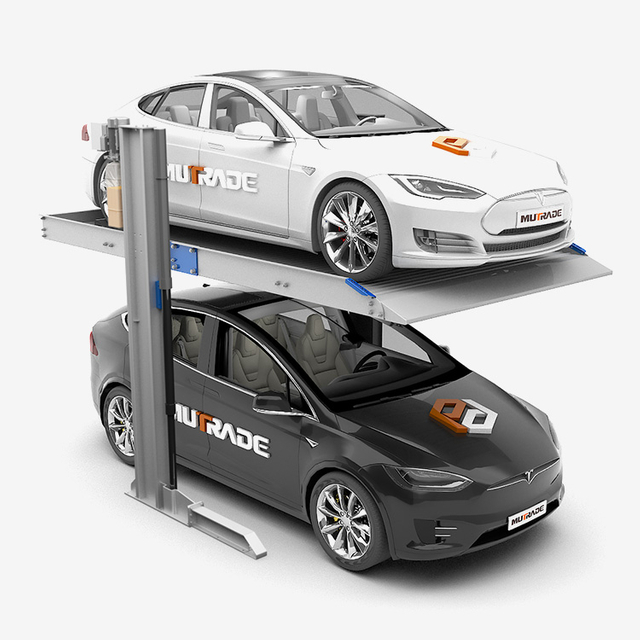
Redundant Column Locks are Essential: Modern four-post parking lifts require dual safety locking systems integrated directly into each column to ensure fail-safe performance during mechanical or hydraulic pressure drops.
Compliance Dictates Design: Safety mechanisms must align with local building codes, ANSI/ALI standards, and insurance underwriting requirements, which vary heavily based on whether the system is automated or manually operated.
Active Monitoring Prevents Accidents: Incorporating automated PLC monitoring alongside physical motion sensors ensures the platform is locked and secure before any vehicle retrieval or storage process begins.
Controlled Access is a Core Safety Pillar: Interlocked doors and physical access barriers do not just prevent theft; they are active safety components that halt lift operation if compromised.
Table of Contents
Establishing a fail-safe environment in high-density parking requires zero-drop tolerance, automated engagement, and user-proof operation. Operators must trust that the system will hold the vehicle securely regardless of power status or hydraulic integrity. A successful installation means the mechanical locks take the full weight of the platform and the vehicle the moment the lifting cycle finishes. If a hydraulic line blows out, the platform should not move a single inch. We measure success by the system's ability to default to a locked, secure state without requiring human intervention.
Relying solely on hydraulic pressure or lifting cables without auxiliary mechanical load-bearing support introduces severe risks. Hydraulic seals degrade over time. Hoses can burst due to wear, poor routing, or manufacturing defects. Even a slow leak causes hydraulic bleed-off, leading to a gradual platform descent. Without mechanical intervention, a loss of pressure leads directly to gravity taking over. Lifting cables stretch and can snap if shock-loaded. You never want the lifting medium to double as the storage support medium.
Mechanical locks transfer the vehicle's weight off the lifting mechanism and onto the structural columns of the stacker during stationary storage. This relieves pressure on the hydraulic cylinders, extends the life of the seals, and ensures the platform remains locked in place mechanically. Think of it like putting a car on jack stands rather than leaving it on the hydraulic floor jack. The steel locks bear the shear load, providing a physical barrier against descent.
Support Type | Primary Function | Failure Mode | Safety Rating for Storage |
|---|---|---|---|
Hydraulic Cylinders | Active lifting and lowering | Seal leaks, hose bursts, pressure loss | Unsafe for static storage |
Steel Cables | Pulling and leveling | Stretching, fraying, snapping | Unsafe for static storage |
Mechanical Column Locks | Static load bearing | Shear failure (highly unlikely if rated correctly) | Required for static storage |
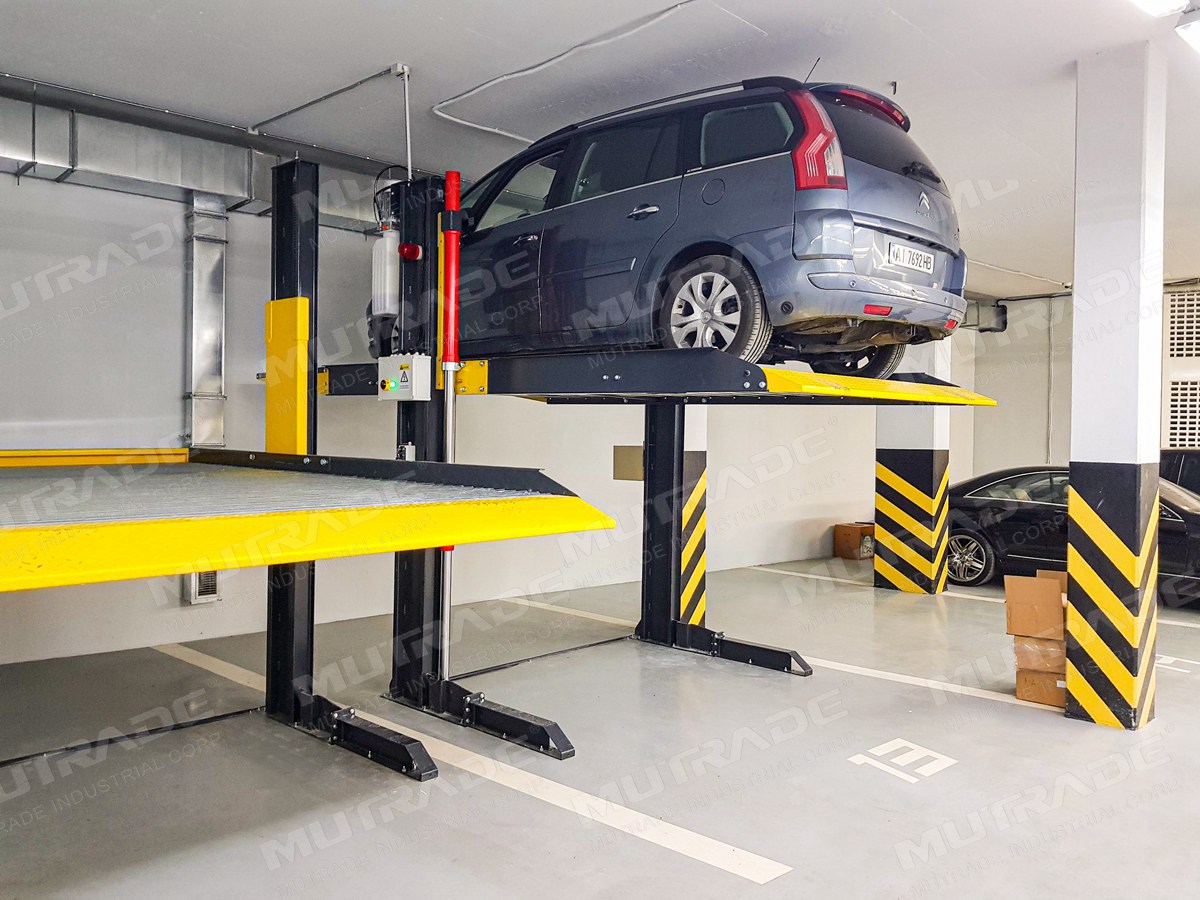
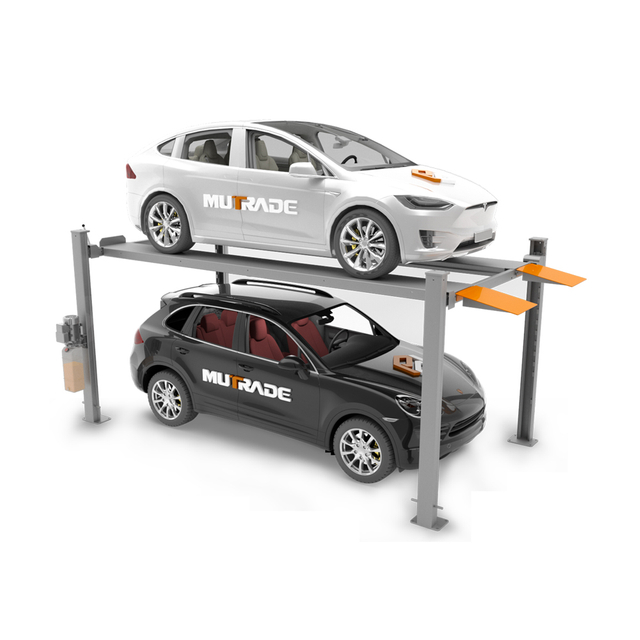
Dual-lock architecture is specifically integrated into each column of a four-post parking lift. This provides mechanical redundancy by pairing primary structural locks with secondary slack-cable safety locks. If the primary lifting mechanism fails, the secondary locks engage instantly. This redundancy is what separates commercial-grade equipment from hobbyist lifts.
Primary Structural Locks: Heavy-duty steel blocks or ladders welded inside the columns. The platform carriage rests directly on these blocks.
Slack-Cable Catchers: Spring-loaded cams that ride along the lifting cables. If a cable loses tension, the spring forces the cam to bite into the column, halting the fall immediately.
Spring-loaded or gravity-engaged locking pins provide immediate security. These pins are engineered to engage instantly once movement stops or upon unexpected tension loss. This mechanism prevents platform free-fall in the stacker, ensuring the vehicle remains secure. Gravity locks are particularly reliable because they do not rely on springs that can rust or snap; they simply fall into place as the carriage passes the locking slots.
Dynamic locks engage continuously as the lift ascends to prevent unexpected descent. You hear this as the familiar clicking sound when a lift goes up. Static locks engage only at designated resting heights. Dynamic locks offer continuous protection during transit, while static locks reduce mechanical wear during operation in multi-level stackers. Choosing between them depends on the specific operational flow of the facility.

Optical and laser sensors prevent lock engagement or platform movement when obstructions are detected in the lift zone. Automated PLC monitoring systems continuously verify the lock engagement state before allowing any system operations, ensuring the path is clear and secure. If a car door is left open or a pedestrian walks under the platform, the sensors trip the control circuit and halt the hydraulic pump instantly.
Immediate power-cutoff switches and interlocked control panels are mandatory. These systems often require two-hand operation or key-access to release locks, preventing accidental deployment or unauthorized operation of the lift. A standard setup requires the operator to turn a key and hold a dead-man switch simultaneously. If they let go, the system stops and the locks re-engage.
Integrating locked entry bays and interlocked doors physically prevents the parking lift from operating if an entry barrier is opened. Securing the storage zones eliminates public access, ensuring unauthorized individuals are restricted from active lift mechanisms. You cannot rely on signs or painted lines; physical steel gates wired into the lift's control board are the only way to guarantee a clear operating zone.
Navigating OSHA requirements, ANSI/ALI ALCTV standards for automotive lifts, and municipal building codes specific to mechanical parking is mandatory. Compliance ensures the structural integrity and operational safety of the system. Local inspectors will look for third-party certification tags on the columns. Without these, you will not get your certificate of occupancy.
The presence of certified dual-locking systems and anti-fall devices directly impacts commercial liability premiums and underwriting approvals. Insurers require proof of redundant safety systems to mitigate the risk of catastrophic failure. A system lacking proper mechanical locks will either be uninsurable or carry premiums that destroy the project's operating budget.
Correlating specific locking mechanisms to operational outcomes helps justify the equipment spend. Automated electronic lock releases reduce user error and facilitate faster vehicle retrieval times compared to manual single-point release systems. When operators do not have to walk around the lift to pull manual release levers, throughput increases significantly.
Lock Release Type | Operational Impact | Maintenance Requirement |
|---|---|---|
Manual Single-Point | Slower retrieval, requires operator physical effort | Low (lubrication of linkage rods) |
Pneumatic Release | Fast, push-button operation | Medium (requires air compressor maintenance) |
Electronic Solenoid | Fastest, integrates with automated systems | High (wiring checks, voltage monitoring) |

Highly automated, sensor-driven locking systems require strict maintenance and have higher upfront costs. Manual-release mechanical locks offer lower costs but rely heavily on operator competence to ensure safe engagement. You have to match the equipment to your maintenance capabilities. Installing a complex PLC-driven system in a facility with no on-site maintenance staff leads to excessive downtime.
Manual single-point lock releases introduce operational friction. Pneumatic or electronic lock releases offer convenience but introduce electrical dependency, requiring robust backup systems. If you use pneumatic locks, you need a reliable air compressor that does not freeze up in winter conditions. Electronic solenoids need clean power and protection from moisture.
Assessing how different Parking Lift,Stacker locks behave during power failures is vital. Fail-secure systems remain locked during outages, requiring specific manual override procedures to retrieve vehicles safely. You must train your staff on how to manually bleed the hydraulic valves and mechanically bypass the solenoids to lower a vehicle when the grid goes down.
Lock failure can occur due to improper leveling, poor concrete anchoring, or column deflection under load. Precise installation tolerances are required to ensure locks engage smoothly and bear weight evenly. If a column is out of plumb by even half an inch, the carriage can bind, preventing the locks from seating fully into the slots. Concrete must meet specific PSI ratings and depth requirements to hold the wedge anchors securely.
Rigorous post-installation load testing and commissioning are necessary. This verifies lock engagement under maximum capacity, ensuring the system performs safely under real-world conditions. We do not just test with empty platforms; we load them with concrete blocks or test vehicles to verify that the hydraulic pressure holds and the mechanical locks engage without shearing or bending.
Establishing baseline requirements for inspecting locking pins, lubricating safety latches, testing slack-cable sensors, and verifying interlocked door sensor calibrations prevents mechanical binding or corrosion. A neglected lock will eventually stick open. Regular greasing of the lock pivots and visual inspections of the cable tension are non-negotiable daily tasks for facility managers.
A reliable parking lift system depends on more than lifting performance—it requires multiple layers of safety protection, redundant locking mechanisms, intelligent monitoring, and strict compliance with industry standards. By selecting systems equipped with certified safety locks, anti-fall devices, emergency protection, and preventive maintenance programs, project owners can significantly improve operational safety while reducing long-term liability and maintenance risks.
Working with an experienced parking system manufacturer is equally important for ensuring product quality and engineering reliability. Mutrade Industrial Corp. specializes in advanced mechanical parking systems, intelligent parking solutions, and customized engineering services. Backed by innovative safety technologies, rigorous quality control, and extensive global project experience, we help developers, contractors, and parking operators implement safe, efficient, and reliable parking systems for commercial and residential applications.
Conduct a site-specific structural evaluation of your concrete slab to ensure it meets the anchor pull-out requirements for the lift columns.
Request detailed lock-mechanism schematics from manufacturers to verify the presence of secondary slack-cable catchers.
Consult with local code enforcement and your insurance underwriter before procurement to confirm the system meets regional safety mandates.
Implement a documented daily inspection checklist for your operators to verify lock engagement and sensor functionality.
A: A dual safety locking system integrates two independent locking mechanisms into each column of the lift, providing primary structural support and secondary slack-cable protection to prevent platform drops.
A: Anti-fall devices use spring-loaded or gravity-engaged locking pins that deploy instantly upon tension loss or when movement stops, physically blocking the platform from descending.
A: Yes, provided they feature automated safety locks, key-controlled operation, and comply with local residential building codes to prevent unauthorized access and ensure structural stability.
A: Most systems are fail-secure, meaning mechanical locks remain engaged during a power loss. Manual override procedures, such as bleeding hydraulic valves, are required to lower the platform.
A: Safety locks should undergo routine visual inspections daily by operators, monthly lubrication checks, and comprehensive professional load testing and maintenance annually.
A: Dynamic locks engage continuously during vertical transit to prevent sudden drops, while static locks engage only when the platform reaches its designated resting height for storage.