- All
- Product Name
- Product Keyword
- Product Model
- Product Summary
- Product Description
- Multi Field Search

 English
Views: 0 Author: Site Editor Publish Time: 2026-08-19 Origin: Site


Expanding vehicle storage capacity forces a hard decision. You must weigh the recurring expenses of off-site storage facilities against the upfront capital expenditure of an in-house solution. Many buyers experience sticker shock when purchasing a Car Parking Lift. The advertised equipment rate rarely represents the final amount spent. Buyers frequently overlook essential secondary expenses like freight delivery, concrete modification, electrical upgrades, and professional installation. Current market trends show that inflation and raw steel valuations heavily impact baseline equipment rates. This guide provides a comprehensive, line-item analysis to help you calculate the true long-term expenses of your investment. You will learn how to budget accurately and ensure safe implementation.
Baseline Equipment Costs: Base unit prices range from ultra-portable DIY maintenance solutions to heavy-duty, high-capacity four-post parking systems.
The Installation Multiplier: Budget additional funds for freight, specialized offloading equipment, and professional installation labor.
Facility Modification Requirements: Hidden costs often lie in site prep—specifically, upgrading concrete slabs (minimum 4-6 inches at 3,000 PSI) and installing dedicated 220V electrical circuits.
Compliance and Safety: Investing in ALI (Automotive Lift Institute) certified equipment carries a premium but is critical for mitigating catastrophic failure risks, maintaining warranties, and satisfying insurance requirements.
Table of Contents
Portable and scissor mechanisms serve specific, constrained use cases. They remain ideal for low-clearance garages and temporary maintenance tasks rather than long-term stacked storage. Ultra-compact DIY solutions offer lower upfront expenses and require zero professional installation fees. However, they feature limited lifting height and severely restrict undercarriage access. Scissor mechanisms utilize hydraulic cylinders pushing against a central pivot linkage. This design creates a massive footprint directly under the vehicle center, making transmission or exhaust work difficult. Because they do not anchor to the floor, they provide flexibility for homeowners who need to move the equipment outside for washing or detailing. The baseline investment remains economical, but the utility is strictly limited to maintenance rather than expanding parking capacity. You trade vertical storage capability for floor-level mobility.
The two-post configuration stands as the industry standard for service and maintenance. It remains less optimal for long-term vehicle storage due to suspension hang. When a vehicle rests on swing arms for extended periods, the suspension components droop, which can stress bushings and shock absorbers. Capacity directly drives the equipment rate. Standard models handle typical passenger cars, while heavy-duty configurations require a larger financial commitment to support commercial trucks. Variables altering the baseline rate include symmetrical versus asymmetrical arm designs. Asymmetrical arms allow the vehicle to sit further back, allowing doors to open fully behind the column. Additionally, baseplate models route cables over the floor, while clear-floor configurations route cables through an overhead beam, requiring higher ceilings but leaving the floor unobstructed. The structural demands on the concrete are highest with this design due to the extreme leverage placed on the baseplates.
Four-post configurations provide the optimal, safest solution for vehicle stacking and long-term storage. The vehicle drives onto two solid steel runways, meaning the tires support the weight naturally. This eliminates suspension stress during long-term storage. Higher capacity models demand a larger initial investment due to thicker steel columns, heavier gauge runways, and larger hydraulic cylinders. Additional variables include optional accessories. Caster kits allow you to move the entire structure while unloaded. Drip trays protect the lower vehicle from fluid leaks. Jack trays provide a mounting point for rolling bridge jacks, enabling wheels-free maintenance. Runway width and lifting height also alter the baseline rate, with extra-tall or extra-wide models commanding a premium for accommodating lifted trucks or wide track sports cars. The internal mechanics rely on a single hydraulic cylinder pulling heavy-duty wire ropes routed through a series of sheaves to lift the carriage evenly.
Subterranean and multi-level stacker systems cater to high-density commercial parking or ultra-luxury residential garages. These systems lower vehicles into a pit or stack three to four vehicles vertically. Extensive excavation, complex hydraulic synchronization, custom structural engineering, and strict municipal permitting drive these premium investments. Subterranean systems require specialized drainage solutions, sump pumps, and reinforced retaining walls to prevent groundwater intrusion. The mechanical components must withstand high humidity environments. These systems represent major construction projects rather than simple equipment purchases, requiring coordination between architects, structural engineers, and specialized installers. The control systems often integrate programmable logic controllers and advanced safety sensors to prevent accidental lowering.
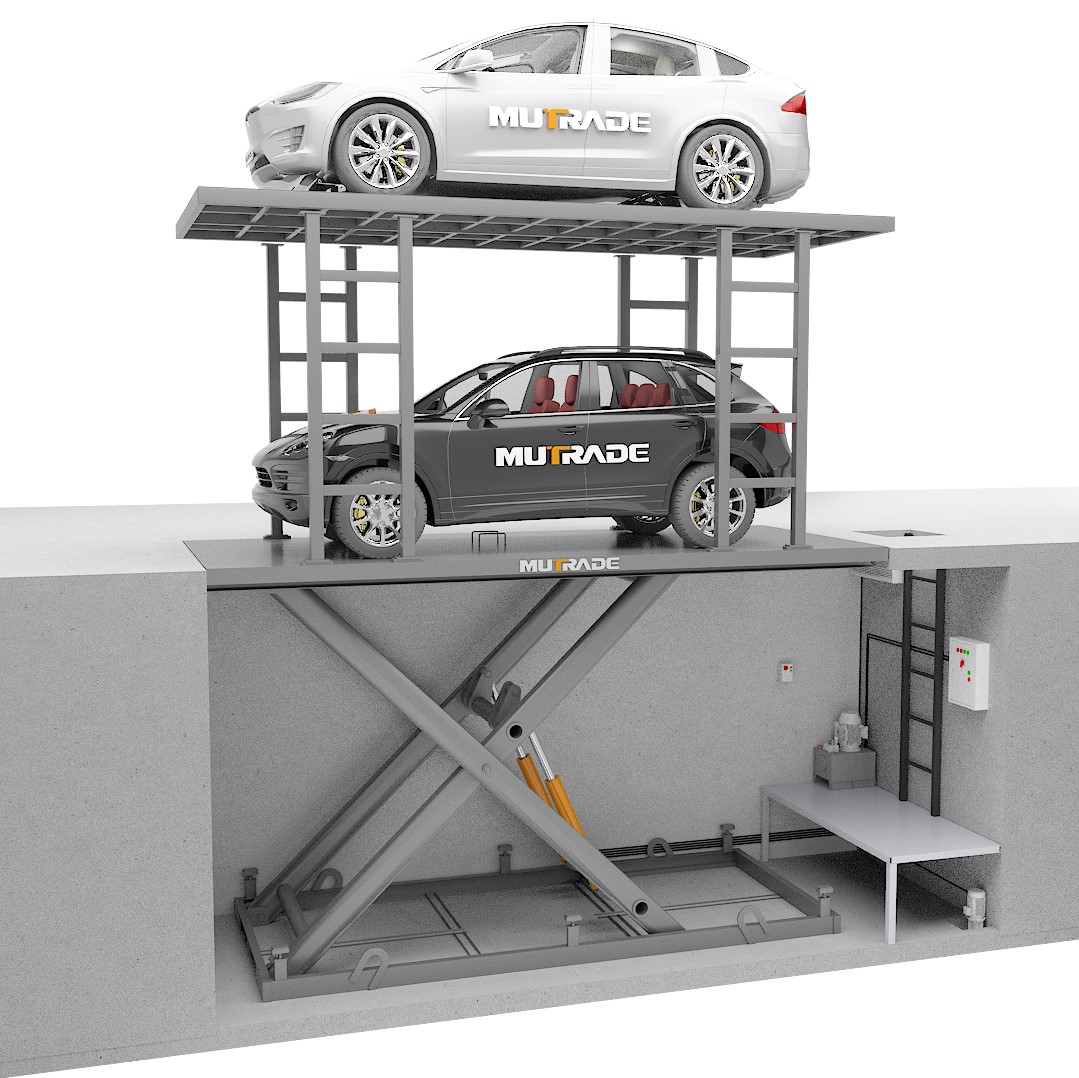
Structural integrity begins at the foundation. Most heavy-duty lifting systems require a minimum of four to six inches of reinforced concrete rated at a minimum of 3,000 PSI. Two-post configurations place immense localized stress on the anchor points, creating a lever effect that tries to pull the anchors out of the floor. Four-post configurations distribute the weight more evenly but still require a solid, level foundation. Core drilling and testing verify existing concrete depth and compressive strength. Sounding the floor with a hammer helps detect hollow spots or severe cracking. If the existing slab fails inspection, you face significant site preparation expenses. Cutting the existing slab, digging deep footings, adding rebar cages, and pouring new high-strength concrete requires specialized contractors and extended curing times before installation can begin. You cannot simply bolt heavy machinery to a cracked, unreinforced residential garage floor.
If your concrete is borderline in thickness, some engineers may specify the use of chemical epoxy anchors instead of mechanical wedge anchors. Epoxy anchors bond directly to the concrete matrix, providing superior pull-out strength without exerting outward expansion pressure on the surrounding slab. However, epoxy requires precise hole cleaning with wire brushes and compressed air, followed by strict temperature-dependent curing times.
Vertical space dictates stacking viability. You must calculate the minimum ceiling height accurately. The calculation framework requires adding the height of the lower vehicle, the height of the upper vehicle, the thickness of the steel runway, the height required to disengage the safety locks, and a safety clearance margin. Standard residential garages often lack this vertical space. Converting standard garage doors to high-lift tracks pushes the door closer to the ceiling, recovering valuable overhead space. Traditional ceiling-mounted garage door openers block the upper vehicle. Installing wall-mounted jackshaft operators connects the motor directly to the torsion spring shaft beside the door. This clears the central overhead space completely, but requires additional budgeting for the hardware and professional garage door technicians.
Power delivery systems dictate operational efficiency. Standard 110V power units plug into standard wall outlets. They offer convenience but operate slowly, often taking over a minute to reach full height. Upgrading to a 220V power unit provides significantly faster operation, reducing the lifting cycle to seconds. However, 220V systems require dedicated breakers, usually 20-amp or 30-amp, depending on the motor specifications. Hiring a licensed electrician to run new conduit, install a subpanel, or upgrade the main breaker represents a necessary facility upgrade. The distance from the main electrical panel to the equipment location heavily influences the required wire gauge and the overall electrical upgrade expense. Surface-mounted conduit provides a practical solution for finished garages, while new construction allows for clean, in-wall wiring.
Facility Modification Checklist
Modification Category | Technical Requirement | Professional Required | Impact on Installation |
|---|---|---|---|
Concrete Foundation | Minimum 4-6 inches depth, 3,000+ PSI rating | Concrete Contractor / Core Driller | Prevents anchor pull-out and structural collapse. |
Garage Door Tracks | High-lift track conversion | Garage Door Technician | Recovers overhead space blocked by standard doors. |
Door Operator | Wall-mounted jackshaft motor | Garage Door Technician | Removes center rail obstacle above the upper vehicle. |
Electrical Supply | Dedicated 220V, 30-amp circuit with disconnect | Licensed Electrician | Enables fast, reliable hydraulic pump operation. |
Logistical realities dictate the delivery process. These systems weigh thousands of pounds and ship in massive steel bundles. Freight terminal pickup generally serves as the most economical choice. You drive a heavy-duty flatbed trailer to the local freight hub, and the terminal staff loads the bundle using heavy forklifts. Residential delivery presents severe challenges. Standard liftgate service proves impossible because the steel runways often exceed fifteen feet in length. A standard liftgate only measures four feet deep, making it physically incapable of supporting the load. Flatbed delivery requires you to have a forklift or telehandler on-site at the exact time of delivery. Renting this equipment adds daily rental fees and delivery charges to your logistical equation. You must also ensure your residential street can accommodate a 53-foot semi-truck.
The DIY route appeals to mechanically inclined buyers but carries substantial physical risks. Standing columns that weigh hundreds of pounds requires engine hoists, heavy-duty ratchet straps, and multiple capable assistants. Routing heavy steel cables through internal sheaves demands precision. If cables cross or twist, they will fray and eventually snap under load. Drilling the concrete requires heavy rotary hammers and precise alignment to ensure the columns stand perfectly plumb. Certified installers charge professional rates based on the system type and location. Professional installation mitigates risk. Installers possess the specialized tools to square the columns perfectly, bleed the hydraulic system of air, and properly torque the wedge anchors to factory specifications.
Air trapped in the hydraulic lines causes the carriage to bounce and lift unevenly. Installers know exactly how to crack the bleeder valves at the top of the cylinders while under load to purge the system. They also understand how to properly seat wedge anchors. If you over-torque a wedge anchor, you can crack the concrete or strip the threads. If you under-torque it, the column can shift under load. Furthermore, many manufacturers only honor their structural warranties if a certified professional completes and signs off on the installation.
Safety compliance requires ongoing diligence. Commercial shops face strict OSHA regulations and local municipal mandates requiring documented annual inspections. Homeowners should follow these exact same best practices to ensure personal safety. Annual professional inspections by ALI-certified technicians verify that all mechanical and structural components remain within safe operating tolerances. Inspectors check wedge anchor torque, inspect welds for stress fractures, measure cable stretch, and verify that the mechanical safety locks engage simultaneously. Documented inspections provide peace of mind and create a verifiable maintenance record that proves invaluable if you ever sell the property or the equipment.
Consumable components require regular attention and replacement. Hydraulic systems rely on clean fluid to function correctly. Hydraulic fluid degrades over time, absorbing moisture and accumulating microscopic metal shavings. Replacing the fluid according to the manufacturer schedule prevents premature wear on the pump and cylinder seals. Wire ropes stretch under heavy loads. You must check cable tension monthly and adjust the equalizer nuts to ensure the carriage lifts evenly. Inspect the wire ropes for broken strands, known as meat hooks. If you find a single broken strand, you must replace the entire cable assembly immediately. Never attempt to splice or repair a lifting cable. Additionally, the plastic or steel sheaves that guide the cables wear down over time. Check the sheave grooves for uneven wear patterns, which indicate a misaligned cable. Hydraulic cylinder seal kits eventually wear out and leak, requiring complete rebuilding. Budgeting for annual parts, fluids, and specialized lubricants prevents larger mechanical failures and extends the operational lifespan of the entire system.
Installing heavy industrial machinery affects your property insurance profile. Homeowners must notify their insurance carriers about the installation. Failure to disclose the equipment can result in denied claims if a vehicle falls or the structure damages the building. Commercial garage liability insurance policies heavily scrutinize lifting equipment. Insurers heavily favor or strictly require ALI-certified equipment. The Automotive Lift Institute subjects equipment to rigorous third-party engineering validations, testing them well beyond their rated capacities. Non-certified equipment represents a massive liability risk. Insurers may increase premiums significantly or drop coverage entirely if they discover non-certified, imported lifting systems operating on the premises.
Poor planning carries steep financial penalties. You must measure your space meticulously before finalizing a purchase. Measure the ceiling height at the lowest obstruction, including light fixtures, garage door openers, and HVAC ductwork. Measure the floor slope; most systems require a floor that slopes no more than a few degrees. Returning heavy equipment due to fitment issues results in massive return freight charges. Suppliers also charge substantial restocking fees to cover the labor of inspecting and repackaging the heavy steel components. A simple tape measure error can result in thousands of dollars in unrecoverable logistical penalties. Map out the footprint on your garage floor using painter's tape to visualize the exact placement and ensure adequate walking clearance around the columns.
Selecting the correct weight capacity requires forward-thinking. Buying a higher capacity system future-proofs your garage. While you may only park a lightweight sports car today, you might acquire a heavy battery-electric vehicle or a full-size pickup truck in the future. Operating machinery at a fraction of its maximum capacity extends its lifespan significantly compared to maxing out a lower-capacity unit. A heavy-duty system features thicker cables, larger hydraulic rams, and more robust safety locks. The premium paid for a higher capacity rating buys a wider safety margin, reduced mechanical strain, and greater long-term versatility.
The market offers numerous cheap, imported, non-certified systems. These units utilize thinner steel, inferior welds, and cheaper hydraulic components. The initial savings on a non-certified model evaporate quickly when evaluated against the hidden risks. If a non-certified system fails, the resulting property damage to the vehicles involved far exceeds the initial savings. More importantly, structural failure risks severe injury or death. Certified models undergo destructive testing to prove their safety factors. Choosing certified equipment guarantees that the engineering data matches the physical reality of the steel, providing an uncompromised safety barrier for your vehicles and your family.
Before ordering any equipment, you must conduct a thorough site assessment. Follow these exact steps to verify your facility can support the machinery.
Measure the total overhead clearance from the concrete floor to the lowest hanging ceiling obstruction.
Map the exact footprint of the baseplates using painter's tape to verify walking clearance and vehicle turning radius.
Hire a concrete contractor to drill a test core in the exact location where the columns will stand.
Verify the concrete core meets the minimum depth and compressive strength requirements specified by the manufacturer.
Inspect the main electrical panel to confirm you have enough amperage capacity to add a dedicated 30-amp breaker.
Measure the slope of the garage floor using a long level to ensure it falls within the acceptable tolerance for the specific model.
Contact your insurance provider to confirm policy requirements regarding heavy machinery installation.
Measure your exact ceiling height from the floor to the lowest hanging obstruction, including light fixtures and garage door tracks.
Hire a concrete contractor to core-drill your existing slab and verify it meets the minimum depth and compressive strength requirements.
Contact a licensed electrician to evaluate your main panel capacity for a dedicated 220V circuit.
Request an itemized freight quote specifying flatbed delivery and on-site forklift requirements.
A: Yes. Most systems require a minimum of four to six inches of reinforced concrete rated at 3,000 PSI or higher. Two-post configurations demand stricter concrete requirements due to the immense leverage placed on the anchor bolts. Core drilling verifies your existing slab thickness.
A: While mechanically possible, DIY installation carries high physical risks and requires specialized tools like engine hoists and rotary hammers. Professional installation ensures perfectly plumb columns, properly torqued anchors, and often validates the manufacturer's structural warranty.
A: You must add the height of the lower vehicle, the upper vehicle, the runway thickness, and a safety clearance margin. Typically, a minimum ceiling height of 114 to 120 inches is required to stack two low-profile sports cars safely.
A: Yes. While some 110V models exist, most efficient hydraulic pumps require a dedicated 220V, 20-amp or 30-amp circuit. You will need a licensed electrician to run the appropriate wire gauge and install a dedicated breaker.
A: Commercial facilities must adhere to OSHA and local mandates requiring documented annual inspections. For residential users, annual inspections by ALI-certified technicians remain a critical best practice to prevent mechanical failures and ensure ongoing safety.
A: The equipment ships in massive bundles weighing thousands of pounds. Standard liftgates cannot accommodate the length of the runways. You must either pick up the bundle at a freight terminal or rent a forklift to unload it at your residence.